
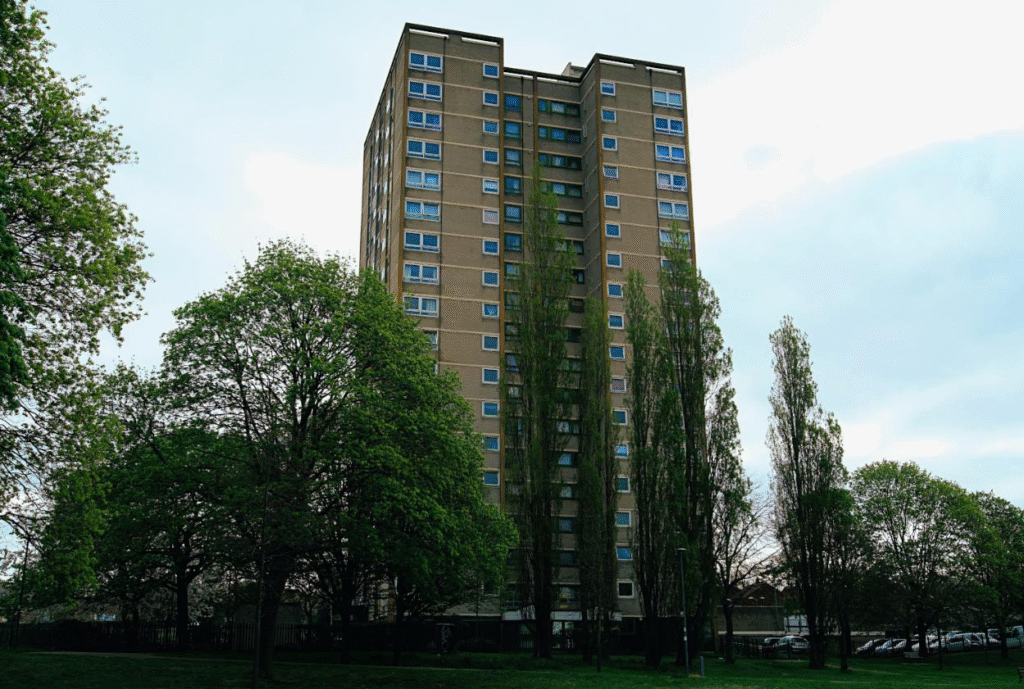
For landlords, housing associations and managing agents in Manchester and across England, thequestion is no longer whether residential evacuation planning rules are coming. They have beeninforcesince 6 April 2026. The challenge now is understanding which buildings are covered, howto engageresidents appropriately and how to turn assessments into workable fire safety arrangements.
The Fire Safety (Residential Evacuation Plans) (England) Regulations 2025 introduce a structured process commonly called Residential Personal Emergency Evacuation Plans (Residential PEEPs). The objective is to improve the safety of residents whose physical or cognitive conditions may affect their ability to evacuate without assistance. The rules supplement, rather than replace, existing duties under the Regulatory Reform (Fire Safety) Order 2005.
Which residential buildings are covered by the new PEEPs regulations?
The Regulations apply in England to buildings containing at least two domestic premises where the building is either at least 18 metres high, has at least seven storeys, or is more than 11 metres high and operates a simultaneous evacuation strategy. Height and storey counts must be determined using the definitions in the Regulations; a building should not be classified solely by an informal description such as “six floors”.
A lower-rise converted house or small block of flats will not automatically fall within these specific regulations. Equally, an 11–18 metre block may be in scope if its actual height exceeds 11 metres and its adopted evacuation strategy is simultaneous evacuation. The correct starting point is to confirm the building configuration and its current fire strategy, not to assume that all blocks are treated alike.
Importantly, a building that is outside the Residential PEEPs regime is not outside fire safety law. Existing fire risk assessment and fire safety management duties continue to apply, and residents who need assistance should still be considered as part of proportionate fire safety planning.
Who is a “relevant resident”?
For these Regulations, a relevant resident is someone whose flat is their only or principal residence and whose ability to evacuate without assistance is compromised by a physical or cognitive impairment or condition. This can include difficulties with mobility, vision, hearing or understanding instructions. The process is not limited to wheelchair users, and it should not be based on assumptions about a person’s age or medical diagnosis.

The responsible person must use reasonable endeavours to identify relevant residents. Government guidance suggests engaging when a resident moves in, issuing a reminder at least every 12 months and responding when someone approaches the building manager. Residents cannot be compelled to participate. Clear, accessible communication and a record of the steps taken are therefore important.
What must the responsible person actually do?
Once a relevant resident has been identified, the responsible person must offer a person-centred fire risk assessment (PCFRA) and ensure one is carried out if the resident requests it. The PCFRA considers the risks created by the resident’s difficulty evacuating and any other building-related fire safety risks arising from their impairment. It is an individual assessment informed by discussion with the resident; it is not simply another box on the communal fire risk assessment template.
Following the assessment, the responsible person must discuss and implement mitigating measures that are reasonable and proportionate under the Regulations. These might include changes to communication arrangements, suitable equipment, or other practical measures, depending on the building and the individual. Decisions about costs and who bears them are subject to specific statutory rules; measures should not be promised or rejected without considering those rules and the circumstances.
The responsible person must also use reasonable endeavours to agree an approach to evacuation with the resident. Where an approach is agreed, it must be recorded in an emergency evacuation statement and a copy provided to the resident. The assessment, measures and any statement must be reviewed no later than 12 months after the relevant starting point, and sooner where circumstances change or a reasonable review is requested.
A building emergency evacuation plan is a separate duty
The Regulations also require a building emergency evacuation plan for every building within scope. This is distinct from an individual resident’s emergency evacuation statement. It must reflect the building’s evacuation instructions, whether relevant residents are present and any additional evacuation arrangements. The plan must be provided to the local fire and rescue authority, kept in the secure information box where the building has one, and reviewed at least every 12 months or earlier if changes make a review necessary.
This is an important management point: the building-level plan is required even if the responsible person has not identified any residents who need a PCFRA. A well-written document must also be consistent with the building’s actual evacuation strategy, available fire safety systems and information given to occupants.
Sharing information with Greater Manchester Fire and Rescue Service
Where a resident gives explicit consent, the responsible person must provide the fire and rescue authority with prescribed basic information: the flat and floor number, an indication of the assistance the resident may require, and whether an emergency evacuation statement exists. The Regulations do not require detailed medical information to be shared. Consent and data protection should be handled carefully, with records kept accurate and appropriately restricted.
For buildings in Greater Manchester, Greater Manchester Fire and Rescue Service currently states that it requires this resident information in the building’s secure information box and is not accepting it electronically. This is a local operational detail worth checking before submitting information, because the Regulations allow the fire and rescue authority to choose the prescribed method. Where the authority requires hard-copy provision and no qualifying secure information box exists, the Regulations can require one to be installed and maintained.
Why a standard fire risk assessment is not enough on its own
A suitable and sufficient fire risk assessment remains fundamental. It considers matters such as means of escape, fire doors, compartmentation, detection and warning, management arrangements and the suitability of the evacuation strategy. Residential PEEPs add a more focused process for the circumstances of individual residents and a formal building-level evacuation plan. These documents should support one another, but they are not interchangeable.
For example, a block may have a current communal fire risk assessment, satisfactory protected escape routes and a documented stay-put strategy. A resident with reduced mobility may nevertheless be unable to follow the usual instructions if a fire affects their own flat or if firefighters direct a wider evacuation. A person-centred assessment can identify that gap and help determine realistic, proportionate measures without automatically changing the building-wide strategy.
The opposite problem is also possible: an individual evacuation statement may be prepared without verifying whether the building’s doors, alarms, escape routes and management arrangements support it. That is why practical coordination between the fire risk assessor, responsible person, resident and competent specialists matters.
Practical steps for housing providers and managing agents
Start by confirming which buildings in your portfolio meet the statutory height, storey or evacuation-strategy thresholds. Check that each building’s fire risk assessment and evacuation strategy are current, then assign clear responsibility for resident engagement, PCFRAs, emergency evacuation statements and the building emergency evacuation plan.
Use an accessible invitation process rather than relying solely on a notice in the entrance lobby. Record offers of assessment, requests, refusals, agreed measures and review dates. Make sure contractors or managing agents carrying out remedial work provide evidence of completion, and verify that any change genuinely addresses the finding before closing it on the action plan.
Finally, confirm how your local fire and rescue service wants to receive the required information. In Greater Manchester, this includes checking the secure information box arrangements. A planned annual review is useful, but it should not delay action when a resident’s needs, the building or its evacuation strategy changes.
How Grey Knight Solutions can help
Grey Knight Solutions Ltd supports residential landlords, managing agents and housing providers with professional fire risk assessments and practical fire safety compliance advice across Manchester and the North West. We can help clients review the relationship between their existing fire risk assessment, evacuation strategy, resident-related risks and prioritised remedial actions, and identify where further person-centred assessment or specialist input is needed.
If you manage a block of flats and are unsure whether the Residential PEEPs Regulations apply, or whether your existing arrangements adequately address residents who may need evacuation support, contact Grey Knight Solutions Ltd to discuss a proportionate review. Good compliance is not simply about having the correct paperwork; it is about ensuring the arrangements can work in practice.